
2026-10-07 · Ikaika Naeole
Recognizing Mold Growth In AC Units During Hawaii's Humid Season
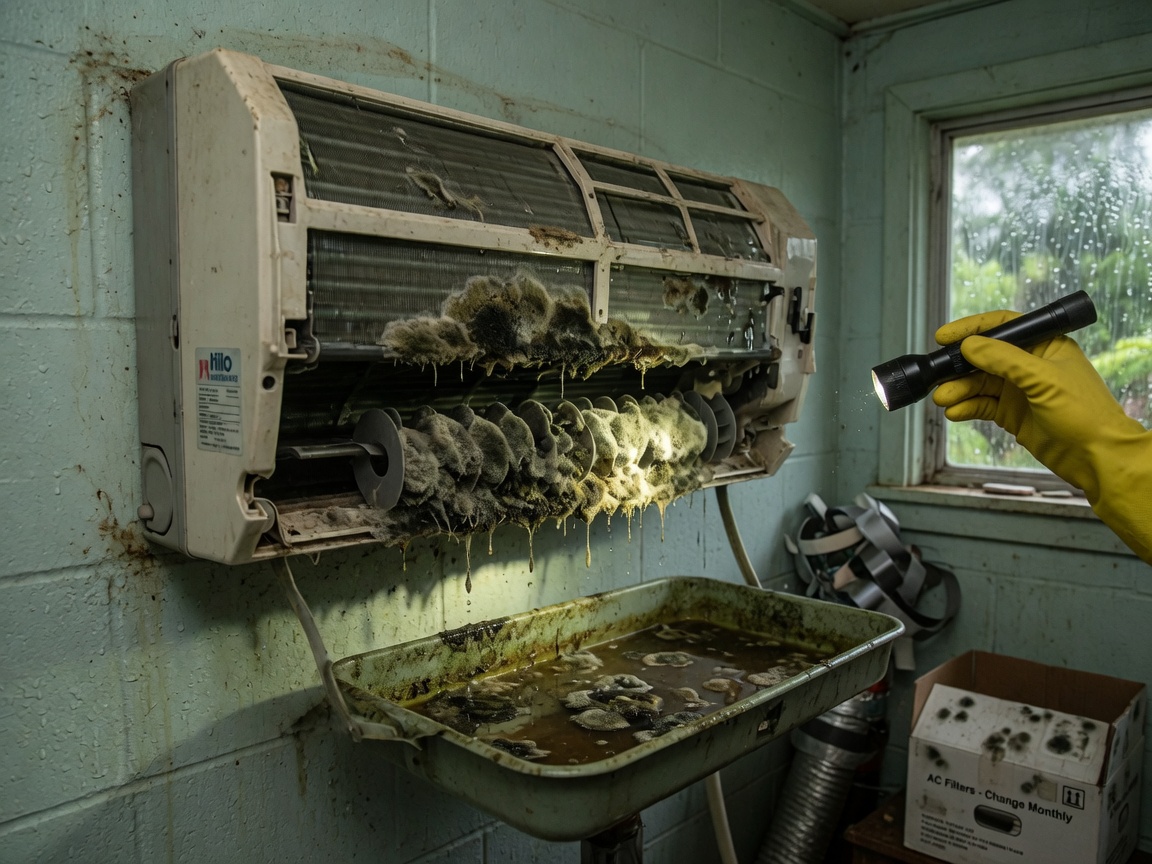
In Hilo's tropical rainforest climate, mold can begin growing inside AC units within 24 to 48 hours once indoor humidity stays above 60 percent, especially after the steady rainfall that soaks Downtown Hilo, Waiakea, and Puueo. The mild year-round temperatures keep coils damp while the constant moisture from Hilo Bay and surrounding terrain prevents full drying between showers. Older housing stock in these neighborhoods often has ductwork and drain pans that trap water longer than newer builds in Keaau or Pahoa, giving spores an easy foothold on evaporator coils and insulation.
Humidity and Mold Formation in Tropical Climates
Hilo receives rain on most days, and the combination of warm air and high moisture loads pushes relative humidity inside homes well above the 50 percent threshold that discourages microbial growth. When an AC runs, the evaporator coil pulls moisture from the air and channels it to the drain pan; any restriction or slow drainage leaves standing water that feeds mold within a day or two. In Waiakea homes built on older slabs, condensate lines often slope poorly because of slight settling, so even a small clog from leaf debris or mineral scale creates a persistent wet zone. The same pattern appears in Puueo properties where roof runoff can raise ambient moisture around outdoor condensers. Because temperatures rarely drop below 70 degrees, the system never gets a natural dry-out period, allowing colonies to spread from the coil into the blower housing and supply ducts. Regular monitoring of humidity levels with an inexpensive meter helps owners notice when conditions favor growth before visible patches appear.
Visible and Hidden Signs in Hilo Homes
Mold shows up first as dark gray or black streaks on the evaporator coil fins or as a musty odor that intensifies when the fan starts. In many Downtown Hilo residences the return-air grille sits low, so homeowners may see fuzzy growth on the filter or the first few feet of duct liner. Hidden colonies often form inside the condensate drain pan or on the underside of the blower wheel, releasing spores into the airstream without obvious surface evidence. A sudden increase in allergy symptoms or a film on hard surfaces near supply vents can signal hidden growth in systems serving older Waiakea bungalows. Checking the drain line for slow flow or gurgling sounds during operation reveals clogs that keep the pan wet. When the system has run continuously through a week of daily showers, the insulation around refrigerant lines may feel damp or show discoloration at the joints.
Impact of Frequent Rainfall on AC Components
Heavy showers common from November through March wash pollen, volcanic ash, and fine soil into outdoor units, coating the condenser coils and reducing airflow. Restricted airflow forces the evaporator to run colder and longer, producing excess condensate that overwhelms the drain. In Puueo and near Hilo Bay, salt-laden air accelerates corrosion on metal pans and fins, creating small pits that hold water even after the rain stops. Nearby Pahoa and Keaau experience similar downpours but with slightly different wind patterns that can push debris deeper into the fins. A clogged filter after one of these storms compounds the problem by lowering airflow across the wet coil. Linking filter changes to rainfall events, as covered in AC Filter Replacement After Heavy Hilo Rainfall, prevents the moisture buildup that precedes mold. Keeping the outdoor unit clear of vegetation and rinsing coils monthly during the wettest months reduces the load that leads to standing water indoors.
Inspection and Maintenance Practices
Begin any inspection by turning off power at the breaker and removing the access panel to view the evaporator coil without touching wet surfaces. Shine a flashlight across the fins to look for dark patches or fuzzy growth, then check the drain pan for slime or standing water. Run a wet/dry vac on the condensate line to clear minor blockages before they back up into the pan. For systems in older Downtown Hilo homes, pull the filter and examine both sides for discoloration that indicates upstream growth. When mold is visible on more than a small section of coil or inside the duct liner, professional cleaning of the entire airstream path becomes necessary. Scheduling seasonal checks through AC Maintenance keeps drain lines clear and humidity levels under control. In homes where mold has already spread, pairing duct cleaning with Indoor Air Quality Testing confirms whether spores remain in the system after the initial treatment.