
2026-10-07 · Ikaika Naeole
AC Filter Replacement After Heavy Hilo Rainfall
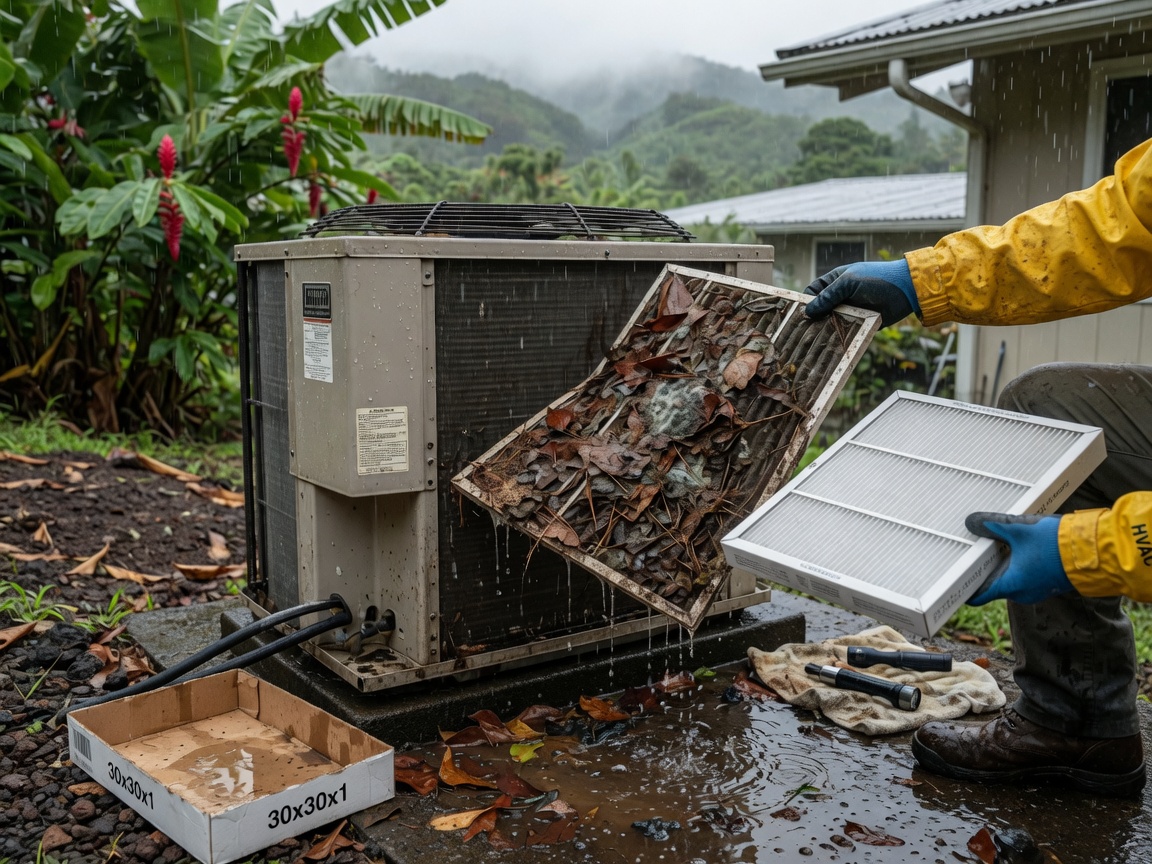
After heavy rainfall in Hilo, inspect and replace your AC filter within three to five weeks rather than waiting the usual two months, since constant moisture from the tropical rainforest climate loads filters with water and airborne particles faster.
How Hilo Rainfall Loads Filters Faster
Hilo's frequent downpours and mild year-round temperatures keep relative humidity high, so condensate on evaporator coils mixes with dust and pollen drawn through the return. In areas like Waiakea and Puueo, older single-wall homes pull in more outdoor air during storms, pushing saturated air past the filter and causing it to mat down within weeks. This restricts airflow, raises energy use, and can lead to frozen coils if ignored. Homeowners near Hilo Bay or Liliuokalani Gardens often notice the change first because sea breezes carry extra salt and moisture that sticks to the media. Checking the filter after each major rain event prevents these issues before they affect cooling performance across Hawaii County.
Checking Filter Condition in Wet Weather
Pull the filter and hold it up to bright light; if light passes through less than half the surface or the pleats feel damp and heavy, replacement is due. In heavy rain periods, repeat this check every ten to fourteen days instead of monthly. Look for gray or brown discoloration along the edges, which signals trapped water and organic matter that feeds mold later. Residents in Downtown Hilo with central systems should also inspect the return grille for visible buildup, since shorter duct runs in compact lots move humid air quicker. Keep a spare filter on hand at the 325 E Makaala St location so swaps happen the same day you notice restriction.
Proper Replacement Steps for Local Systems
Turn the thermostat to off and locate the filter slot, usually behind the return grille or inside the air handler. Slide out the old filter, note the arrow direction for airflow, and insert the new one the same way. Use MERV 8 or 11 media sized exactly to the slot to avoid gaps that let unfiltered air bypass. After reinstalling, run the system for fifteen minutes and confirm airflow at the vents feels stronger. Dispose of the wet filter in a sealed bag to keep spores out of living spaces. This process takes under ten minutes once you have the correct size stocked.
Linking Filter Care to Ongoing Maintenance
Routine filter changes pair directly with AC Maintenance visits that include coil cleaning and drain line checks, both critical when Hilo rain keeps systems running longer. Skipping changes can push problems into the evaporator where moisture creates conditions covered in Recognizing Mold Growth In AC Units During Hawaii's Humid Season. If airflow stays weak after a new filter, schedule AC Repair to rule out blower issues common in older Waiakea homes.
When Professional Service Becomes Necessary
If the filter loads again within ten days or you see water around the air handler, call for help rather than continuing DIY swaps. Persistent saturation often points to a clogged condensate line or low refrigerant, both frequent after extended wet spells in Pahoa and Keaau. Technicians can measure static pressure and confirm the system is not short-cycling from restricted flow. Keeping records of replacement dates helps spot patterns tied to specific storm events and guides future timing in Hawaii County's variable weather.